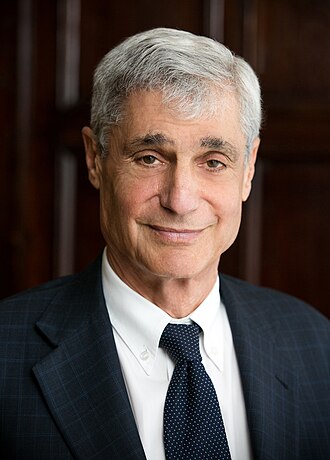
Facts (28)
Data Freshness
Ageing
Last update: 159d ago · Avg age: 3956d
Confidence Tiers:
Primary Source — cross-referenced government/corporate filings
Pending Review — sourced but not independently verified
AI Inference — analytical hypothesis from cross-referencing
✓ Verified Findings (28)
Independently re-checked: a second model read the source artifact and confirmed it supports the extracted claim.
✓ verified
Primary Source
At April 1998 meeting, Robert Rubin asked Born 'You're not going to do anything, right?' after regulators laid out opposition to derivatives regulation
✓ verified
Pending Review
Rubin served as the 70th United States Secretary of the Treasury from January 10, 1995 to July 2, 1999
Date: 1995-01-10
Added: 15 Apr 2026
UNVERIFIED Treasury Department records; Senate confirmation records
✓ verified
Pending Review
POGO obtained notes from the April 1998 meeting showing Rubin said the 'financial community' was 'petrified' by CFTC regulation but claimed he 'didn't disagree w/ substance of CFTC's actions' — suggesting he understood the risks but chose Wall Street's interests
Date: 1998-04-15
Added: 15 Apr 2026
UNVERIFIED POGO investigation, published meeting notes
✓ verified
Pending Review
Larry Summers, Rubin's deputy, called Brooksley Born and yelled 'I have 13 bankers in my office who tell me you're going to cause the worst financial crisis since the end of World War II' if she moved forward with derivatives regulation
Date: 1998-06-15
Added: 15 Apr 2026
UNVERIFIED SourceWatch citing Frontline The Warning; Michael Greenberger account
✓ verified
Pending Review
Rubin and Summers recommended Congress relieve the CFTC of regulatory authority over derivatives in November 1999; the Commodity Futures Modernization Act of 2000 subsequently excluded OTC derivatives from CFTC regulation
Date: 1999-11-15
Added: 15 Apr 2026
UNVERIFIED Financial Markets Working Group report November 1999; CFMA legislative record
✓ verified
Pending Review
Rubin allowed the Citibank-Travelers Group merger to proceed in 1998 before Glass-Steagall repeal formally legalized it, knowing Gramm-Leach-Bliley was imminent
Date: 1998-06-15
Added: 15 Apr 2026
UNVERIFIED SourceWatch analysis; Citigroup merger timeline; regulatory records
✓ verified
Pending Review
Upon leaving Treasury in July 1999, Rubin immediately joined Citigroup as an adviser to senior executives; he was paid a guaranteed first-year salary of $15 million plus unlimited use of the firm's private jet fleet
Date: 1999-09-15
Added: 15 Apr 2026
UNVERIFIED Celebrity Net Worth; Bloomberg Businessweek; SourceWatch
✓ verified
Pending Review
Rubin served temporarily as Citigroup Chairman from November to December 2007, during the onset of the financial crisis
Date: 2007-11-15
Added: 15 Apr 2026
UNVERIFIED SourceWatch; Citigroup corporate records
✓ verified
Pending Review
Robert Rubin joined Goldman Sachs in 1966 in the risk arbitrage department, rose to co-chief operating officer, then co-senior partner and co-chairman from 1990 to 1992, spending 26 years at the firm
Date: 1966-1992
Added: 15 Apr 2026
UNVERIFIED SEC records; Goldman Sachs corporate history
✓ verified
Pending Review
Rubin served as Assistant to the President for Economic Policy and directed the National Economic Council from January 25, 1993 to January 10, 1995
Date: 1993-01-25
Added: 15 Apr 2026
UNVERIFIED White House records; Clinton Presidential Library
✓ verified
Pending Review
Citigroup required a $45 billion TARP bailout ($25 billion in October 2008 plus $20 billion more) and $306 billion in federal asset guarantees to avert systemic failure — BlackRock advised the Federal Reserve on the Citigroup asset pool
Date: 2008-10-15
Added: 15 Apr 2026
UNVERIFIED Treasury TARP records; Federal Reserve disclosure; FCIC report
✓ verified
Pending Review
On May 7, 1998, Rubin joined Greenspan and SEC Chairman Arthur Levitt in issuing a joint statement expressing 'grave concern' about Born's CFTC proposal and announced plans to seek legislation to stop the CFTC
Date: 1998-05-07
Added: 15 Apr 2026
UNVERIFIED Joint regulatory statement; congressional record; Stanford Magazine
✓ verified
Pending Review
At a Treasury Department meeting on April 21, 1998, Rubin told Born that 'the CFTC had no jurisdiction' and should not go forward with derivatives regulation — Born requested his legal analysis and was never provided one
Date: 1998-04-21
Added: 15 Apr 2026
UNVERIFIED Brooksley Born PBS Frontline interview; Stanford Magazine; POGO released meeting…
✓ verified
Pending Review
Between 1999 and 2009, Rubin received total compensation including stock options of $126 million from Citigroup, for a role that involved no managerial or operational responsibility
Date: 1999-2009
Added: 15 Apr 2026
UNVERIFIED Bloomberg Businessweek calculation; Citigroup proxy filings; SEC disclosures
✓ verified
Pending Review
WikiLeaks emails revealed Citigroup executive Michael Froman sent a list of suggested cabinet appointments to the Obama transition team in 2008, suggesting Citigroup had significant influence over the Obama administration's formation during the same period the bank was receiving its bailout
Date: 2008-06-15
Added: 15 Apr 2026
UNVERIFIED WikiLeaks Podesta emails; RT analysis; multiple press reporting
✓ verified
Pending Review
As of 2025, Rubin is co-founder of the Hamilton Project at Brookings Institution, co-chair emeritus of the Council on Foreign Relations, and senior counselor at Centerview Partners
Date: 2025-06-15
Added: 15 Apr 2026
UNVERIFIED Wikipedia; Hamilton Project; CFR records
✓ verified
Pending Review
Gary Gensler, who later became SEC Chairman under Biden, worked under Rubin at Treasury and was involved in the derivatives deregulation effort — when CFTC lawyers tried to reach Treasury's legal counsel on Born's proposal, Gensler told them 'Welcome to the club'
Date: 1998-06-15
Added: 15 Apr 2026
UNVERIFIED Michael Greenberger account via Washington Post; POGO investigation
✓ verified
Pending Review
In 1998, Rubin and Federal Reserve Chairman Alan Greenspan opposed giving the CFTC oversight of over-the-counter credit derivatives when proposed by CFTC Chair Brooksley Born
Date: 1998-06-15
Added: 15 Apr 2026
UNVERIFIED Congressional testimony records; PBS Frontline The Warning; POGO investigation
✓ verified
Pending Review
Citigroup's losses exceeded $27 billion in Q4 2008 alone from aggressive expansion into high-risk mortgage-backed securities and structured finance products that Rubin has been accused of endorsing as part of the bank's growth strategy
Date: 2008-12-15
Added: 15 Apr 2026
UNVERIFIED Financial Crisis Inquiry Commission report
✓ verified
Pending Review
The Financial Crisis Inquiry Commission criticized Rubin's oversight, noting that despite his stature and board-level influence, Rubin claimed ignorance of key subprime exposures until mid-2007
Date: 2011-06-15
Added: 15 Apr 2026
UNVERIFIED Financial Crisis Inquiry Commission Report
✓ verified
Pending Review
Rubin resigned from Citigroup on January 9, 2009, as the bank continued post-bailout restructuring
Date: 2009-01-09
Added: 15 Apr 2026
UNVERIFIED Citigroup corporate filings; press reporting
✓ verified
Pending Review
In February 1999, Time Magazine dubbed Rubin, Greenspan, and Summers 'The Committee to Save the World' on its cover — the same three officials who suppressed derivatives regulation
Date: 1999-02-15
Added: 15 Apr 2026
UNVERIFIED Time Magazine cover, February 15, 1999
✓ verified
Pending Review
Rubin championed his mentor role for Larry Summers, who continued the deregulation agenda as Deputy Treasury Secretary and then Treasury Secretary, and later directed Obama's National Economic Council during the crisis response — ensuring continuity of Rubin's policy framework across three administrations
Date: 1995-2010
Added: 15 Apr 2026
UNVERIFIED SourceWatch; Chronicle of Higher Education; multiple biographical accounts
✓ verified
Pending Review
A group of investors filed a lawsuit alleging Rubin and other Citigroup executives sold shares at inflated prices while concealing the firm's risks; the lawsuit was settled in 2012
Date: 2012-06-15
Added: 15 Apr 2026
UNVERIFIED Celebrity Net Worth; court records of Citigroup investor lawsuit
✓ verified
Pending Review
Clinton told ABC News in 2010 he should not have listened to Rubin's advice against regulating derivatives: 'On derivatives, yeah I think they were wrong and I was wrong to take their advice'
Date: 2010-06-15
Added: 15 Apr 2026
UNVERIFIED ABC News Clinton interview 2010
✓ verified
Partially Corroborated
After resigning as Treasury Secretary, Robert Rubin was secretly in negotiations to join Citigroup while helping broker final Gramm-Leach-Bliley deal
✓ verified
Primary Source
Robert Rubin joined Citigroup in October 1999 as chairman of executive committee with $15 million guaranteed first-year salary
✓ verified
Primary Source
Robert Rubin received $126 million in total compensation from Citigroup between 1999-2009
All Connections (34)
advocacy_and_benefit
confirmed
Championed deregulation as Treasury Secretary then immediately benefited financially at Citigroup
crisis_chain
secondary
Rubin's deregulation created the conditions for the 2008 crisis. His bank Citigroup needed a $45B bailout and $306B guarantee — BlackRock advised the Fed on the Citigroup asset pool. Rubin's policies → crisis → BlackRock becomes government's crisis manager → BlackRock becomes world's largest asset manager.
crisis_chain
inferential
Rubin's deregulation created the crisis that made Fink the government's indispensable financial fixer. The Citigroup bailout that Rubin's tenure enabled was among the assets BlackRock was hired to evaluate. Without Rubin's policies, Fink's empire doesn't exist at its current scale.
causal_chain
secondary
Rubin's Glass-Steagall repeal enabled the creation of toxic instruments at Bear Stearns. Bear Stearns collapsed. Maiden Lane LLC was created to hold Bear Stearns toxic assets. BlackRock managed Maiden Lane. Rubin is the first domino in this chain.
protege_network
primary
Summers was Rubin's deputy at Treasury, then succeeded him as Treasury Secretary. He continued the deregulation agenda, yelled at Brooksley Born on Rubin's behalf, then became Obama's NEC Director — ensuring continuity of Rubin's policy framework across three administrations.
revolving_door
primary
Rubin spent 26 years at Goldman Sachs rising to co-chairman before entering government. The Goldman-to-government pipeline he exemplifies has shaped financial regulation for decades.
revolving_door
primary
Rubin championed Glass-Steagall repeal as Treasury Secretary, which legalized Citigroup's existence, then immediately joined Citigroup for $126 million in compensation for a role with no managerial responsibility. The most documented revolving-door case in modern financial history.
oversight
primary
Rubin and Greenspan together suppressed Brooksley Born's derivatives regulation at the CFTC, issued joint statements opposing CFTC oversight, and were celebrated as 'The Committee to Save the World' by Time Magazine while dismantling the regulatory framework that could have prevented the 2008 crisis.
suppression
primary
Rubin told Born the CFTC had no jurisdiction over derivatives, issued joint statements to stop her proposals, and recommended legislation to strip the CFTC of authority. POGO meeting notes show Rubin acknowledged the 'financial community' was 'petrified' but chose Wall Street's interests over Born's warnings.
oversight
primary
Levitt joined Rubin and Greenspan in the May 1998 joint statement expressing 'grave concern' about Born's CFTC proposal. Levitt later expressed regret for his role in suppressing Born, unlike Rubin.
protege_network
secondary
Geithner served under Rubin at Treasury, then became NY Fed President, then Obama's Treasury Secretary. He awarded BlackRock's no-bid crisis contracts. Rubin's protege network ensured continuity of his policy framework: Rubin → Summers → Geithner, spanning Clinton through Obama.
protege_network
secondary
Gensler worked under Rubin at Treasury during the Born suppression. He later became SEC Chairman under Biden (2021-2025). His presence in the derivatives deregulation effort and later SEC leadership represents the revolving door's multi-generational continuity.
successor_pattern
inferential
Bessent is the current Treasury Secretary (2025-present). Rubin established the modern pattern of Wall Street executives running Treasury to benefit their network. Bessent's refusal to release Epstein files while overseeing financial regulation echoes Rubin's pattern of using Treasury's authority to protect connected interests.
government_role
primary
since 1993
Rubin served as Assistant to the President for Economic Policy and directed the National Economic Council from January 25, 1993 to January 10, 1995
legislative_involvement
primary
since 1999
Rubin and Summers recommended Congress relieve the CFTC of regulatory authority over derivatives in November 1999; the Commodity Futures Modernization Act of 2000 subsequently excluded OTC derivatives from CFTC regulation
membership
inferential
since 2008
Michael Froman, a Citigroup executive, sent a list of suggested cabinet appointments to the Obama transition team in 2008; Froman worked under Rubin's policy framework as the WikiLeaks emails revealed Citigroup's influence during the same period the bank received its bailout
employment
primary
since 2025
As of 2025, Rubin is senior counselor at Centerview Partners
foundation_role
primary
since 2025
As of 2025, Rubin is co-founder of the Hamilton Project at Brookings Institution
membership
primary
since 2025
As of 2025, Rubin is co-chair emeritus of the Council on Foreign Relations
subject_of_investigation, referred for investigation
primary
since 2007
The Financial Crisis Inquiry Commission criticized Rubin's oversight at Citigroup, noting that despite his stature and board-level influence, Rubin claimed ignorance of key subprime exposures until mid-2007 · Financial Crisis Inquiry Commission voted 6-0 to refer Robert Rubin to Department of Justice for investigation on September 29, 2010
legislative_association
secondary
since 1999
Rubin helped broker the final Gramm-Leach-Bliley deal, named after Phil Gramm among others, while secretly negotiating to join Citigroup
political_association
secondary
since 1993
Clinton told ABC News in 2010 he should not have listened to Rubin's advice against regulating derivatives, indicating Rubin's advisory role to the Clinton administration beyond Treasury
membership
inferential
since 1998
Sanford Weill was involved in the Citibank-Travelers Group merger that Rubin allowed to proceed in 1998 before Glass-Steagall repeal; Rubin joined Citigroup which was formed from this merger
policy_architect, advisor
primary
Rubin served as Clinton's chief economic adviser (NEC Director 1993-1995) then Treasury Secretary (1995-1999). He was the primary architect of Clinton's financial deregulation agenda including Glass-Steagall repeal and derivatives deregulation. Clinton later admitted Rubin's advice on derivatives was wrong. · Rubin served as Clinton's Treasury Secretary 1995-1999 and was the principal architect of GLB and the CFMA framework. He and Clinton jointly overruled Brooksley Born's derivatives regulation proposal. Rubin left to join Citigroup — which needed GLB's passage to legalize its own formation — within months of GLB's signing.
indirect_pipeline
inferential
Rubin's deregulation → crisis → BlackRock hired as crisis manager → Danzeisen (BlackRock VP 2002-2008) gains crisis-era institutional knowledge → Danzeisen joins Thiel Capital 2008 → co-founds Crescendo Equity Partners → controls semiconductor supply chain. Rubin is the origin of the pipeline that delivered BlackRock expertise into the Thiel network.
policy_enabler
secondary
Rubin's championing of Glass-Steagall repeal and derivatives deregulation created the regulatory environment in which Bear Stearns could leverage toxic mortgage-backed securities. Bear Stearns' collapse was a direct consequence of the deregulated environment Rubin created.
structural_predecessor
inferential
Rubin perfected the model Thiel now operates: use government position to shape policy that benefits your network, then move to the private sector to profit from those policies. Rubin went Goldman→Treasury→Citigroup. Thiel's network goes Palantir→White House→defense contracts. Same playbook, different era.
affiliation
inferential
Rubin ran Goldman Sachs where Epstein maintained Wall Street connections. Both operated in the elite financial circles of the 1990s-2000s. Epstein's first employer was Bear Stearns — whose collapse was enabled by Rubin's deregulation.
historical_irony
inferential
Thiel funds Strive to attack BlackRock's ESG investing. But BlackRock only achieved its dominant position because of the 2008 crisis, which was caused by the deregulation that Rubin championed. Thiel's attack on Fink is enabled by the same crisis-era dynamics that Rubin's protege Danzeisen brought into the Thiel network.
policy_advocate_for_repeal
primary
since 1999
As Treasury Secretary and later Citigroup executive, Robert Rubin supported financial deregulation including the repeal of Glass-Steagall.
government_official_involved
primary
since 1998
Robert Rubin, as Treasury Secretary in 1998, was part of the government response to the Long-Term Capital Management crisis.
Alias / Same Person
primary
since 1966
'Robert Edward Rubin' is the full legal name of the person commonly known as 'Robert Rubin', as documented in the entity database.
policy counterpart
secondary
since 1999
As Treasury Secretary during passage of the Gramm-Leach-Bliley Act, Rubin was a key administration figure involved with Bliley on the legislation. Rubin later became a senior executive at Citigroup, which benefited from the law.
financial_regulation_context
inferential
since 2010
Both Elizabeth Warren and Robert Rubin appear in the known entities list; Warren has been a critic of financial deregulation associated with the Rubin era at Treasury, but the documented facts do not confirm direct interaction.
Sources (39)
2026
UNVERIFIED Research: Robert Rubin — FEC donations (no results)
fec_record
Processed
📜 Receipt
2026-05-10
UNVERIFIED SEARCH_ERROR: Robert Rubin not found in fec
claim_flag
Processed
📜 Receipt
2026
UNVERIFIED Research: Robert Rubin — Parliamentary records (no results)
parliamentary_record
Processed
📜 Receipt
2026
UNVERIFIED Research: Robert Rubin — Lobbying disclosures (no results)
government_disclosure
Processed
📜 Receipt
2026
UNVERIFIED Research: Robert Rubin — Court records (no results)
court_document
Processed
📜 Receipt
2012
UNVERIFIED Celebrity Net Worth; court records of Citigroup investor lawsuit
public_record
Raw
📜 Receipt
1998
UNVERIFIED Congressional testimony records; PBS Frontline The Warning; POGO investigation
public_record
Raw
📜 Receipt
2007-11
UNVERIFIED SourceWatch; Citigroup corporate records
public_record
Raw
📜 Receipt
1998
UNVERIFIED Michael Greenberger account via Washington Post; POGO investigation
investigation
Raw
📜 Receipt
2008-12
UNVERIFIED Financial Crisis Inquiry Commission report
investigation
Raw
📜 Receipt
2009-01-09
UNVERIFIED Citigroup corporate filings; press reporting
public_record
Raw
📜 Receipt
1998-05-07
UNVERIFIED Joint regulatory statement; congressional record; Stanford Magazine
public_record
Raw
📜 Receipt
1998-04
UNVERIFIED POGO investigation, published meeting notes
investigation
Raw
📜 Receipt
1999-09
UNVERIFIED Celebrity Net Worth; Bloomberg Businessweek; SourceWatch
media
Raw
📜 Receipt
1995-01-10
UNVERIFIED Treasury Department records; Senate confirmation records
public_record
Raw
📜 Receipt
1966-1992
UNVERIFIED SEC records; Goldman Sachs corporate history
public_record
Raw
📜 Receipt
1993-01-25
UNVERIFIED White House records; Clinton Presidential Library
public_record
Raw
📜 Receipt
2008-10
UNVERIFIED Treasury TARP records; Federal Reserve disclosure; FCIC report
public_record
Raw
📜 Receipt
2025
UNVERIFIED Wikipedia; Hamilton Project; CFR records
media
Raw
📜 Receipt
2008
UNVERIFIED WikiLeaks Podesta emails; RT analysis; multiple press reporting
investigation
Raw
📜 Receipt
1998
UNVERIFIED SourceWatch analysis; Citigroup merger timeline; regulatory records
public_record
Raw
📜 Receipt
2011
UNVERIFIED Financial Crisis Inquiry Commission Report
public_record
Raw
📜 Receipt
1998
UNVERIFIED SourceWatch citing Frontline The Warning; Michael Greenberger account
investigation
Raw
📜 Receipt
2010
UNVERIFIED ABC News Clinton interview 2010
media
Raw
📜 Receipt
1999-2009
UNVERIFIED Bloomberg Businessweek calculation; Citigroup proxy filings; SEC disclosures
public_record
Raw
📜 Receipt
1999-02-15
UNVERIFIED Time Magazine cover, February 15, 1999
media
Raw
📜 Receipt
1995-2010
UNVERIFIED SourceWatch; Chronicle of Higher Education; multiple biographical accounts
media
Raw
📜 Receipt
1999-11
UNVERIFIED Financial Markets Working Group report November 1999; CFMA legislative record
public_record
Raw
📜 Receipt
1998-04-21
UNVERIFIED Brooksley Born PBS Frontline interview; Stanford Magazine; POGO released meeting…
investigation
Raw
📜 Receipt