[ Enter Database → ]
Analytical Framework

Preparedness & Risk Perception Analysis

Mapping the convergence of public doomsday advocacy and private survival preparation among tracked entities. When those who warn loudest about catastrophe are also those building the biggest bunkers, the contradiction reveals a fundamental gap between public risk assessment and private conviction.

The Preparedness Matrix

Two metrics create the analytical lens: Preparedness (material steps to ensure personal survival) and Public Advocacy (statements amplifying perception of existential threats).

Risk Amplifier
High Preparedness · High Advocacy
Both warns of catastrophe AND prepares for it — suggests deep conviction or strategic perception-shaping while personally hedging
3
Risk Hedger
High Preparedness · Low Advocacy
Quietly preparing but not publicly warning — could indicate cynical assessment or belief that public panic is counterproductive
13
Risk Theorist
Low Preparedness · High Advocacy
Warns of threats but takes no material steps — could suggest a purely rhetorical stance or belief the threat is not immediate
5

Risk Amplifiers

Entities that both warn of catastrophe and are materially preparing for it
Elon Musk
Elon Musk
Risk Amplifier
Preparedness
Elon Musk's stated "Plan B" for civilisational collapse is not a terrestrial bunker but establishing a self-sustaining colony on Mars as a backup for humanity. SpaceX's mission statement explicitly frames interplanetary colonisation as an existential risk mitigation strategy. This represents a qualitatively different form of preparedness — planetary-scale rather than personal-scale.
Primary Source
Public Advocacy
Elon Musk's stated "Plan B" for civilisational collapse is not a terrestrial bunker but establishing a self-sustaining colony on Mars as a backup for humanity. SpaceX's mission statement explicitly frames interplanetary colonisation as an existential risk mitigation strategy. This represents a qualitatively different form of preparedness — planetary-scale rather than personal-scale.
Primary Source
Peter Thiel
Peter Thiel
Risk Amplifier
Preparedness
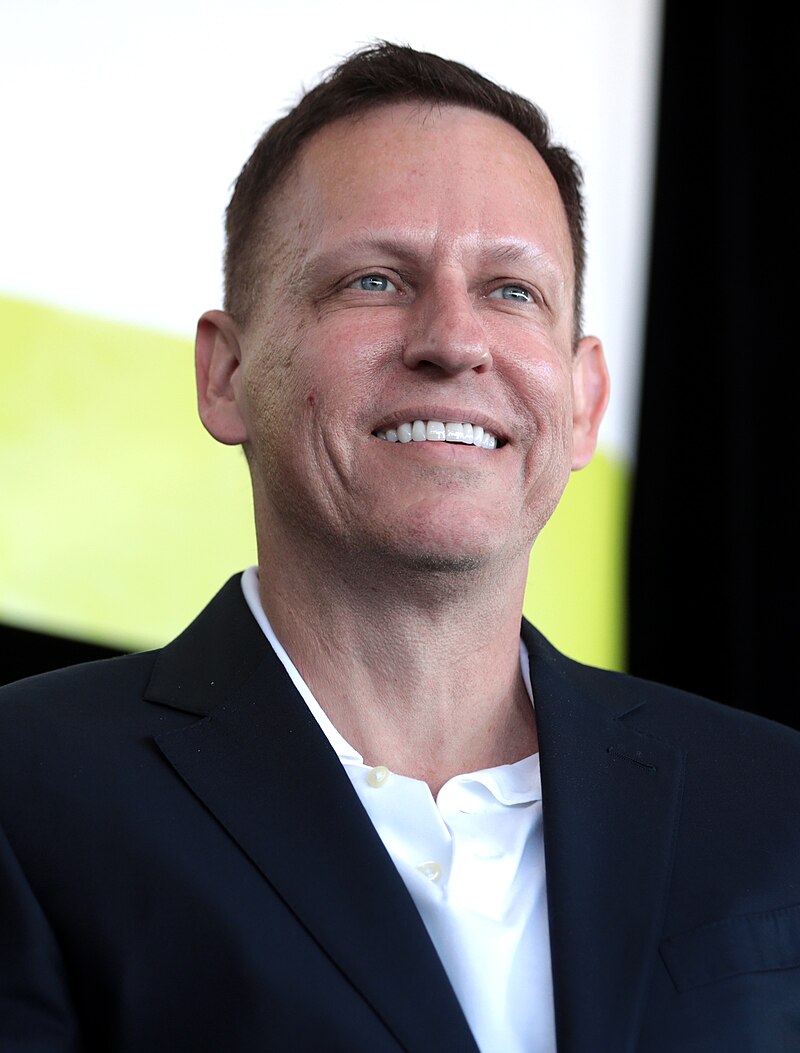
The convergence of Peter Thiel's doomsday advocacy (Antichrist lectures, existential risk framing), his New Zealand citizenship, and his planned bunker-style compound forms a self-reinforcing loop of risk perception and personal preparation that is unique among the Palantir/GOP network tracked by Goblin House.
AI Inference
Public Advocacy
Hosts a series of closed-door lectures on the concept of the Antichrist, suggesting that fear of existential threats (AI, nuclear war) could be used to justify centralised global governance. This advocacy positions catastrophic risk as both a genuine concern and a political instrument.
Pending Review
SA
Sam Altman
Risk Amplifier
Preparedness
In a 2016 New Yorker profile, Sam Altman stated: "I have guns, gold, potassium iodide, antibiotics, batteries, water, gas masks from the Israeli Defense Force, and a big patch of land in Big Sur I can fly to." Also confirmed his home has a "reinforced underground basement."
Primary Source
Public Advocacy
Signed a 2023 Center for AI Safety statement declaring: "Mitigating the risk of extinction from AI should be a global priority alongside other societal-scale risks such as pandemics and nuclear war." This positions Altman as both a primary architect of AI systems and a public advocate warning about their existential dangers.
Primary Source

Risk Hedgers

Entities quietly preparing without public advocacy
Alex Karp
Alex Karp
Risk Hedger
Preparedness
Subject of ARD documentary "Watching You — The World of Palantir." Karp's public statements and Palantir's operational portfolio place him at the centre of debates on mass surveillance, democratic oversight, and the concentration of intelligence capabilities in private hands. His advocacy is indirect — through his company's expanding role in military and intelligence operations — rather than explicit doomsday warnings.
Pending Review
CS
Chuck Schumer
Risk Hedger
Preparedness
[statement] Schumer in a 2005 Senate floor speech passionately defended the filibuster, warning that eliminating it would turn the country 'into a banana republic, where if you don't get your way, you change the rules. It will be doomsday for democracy if we do.'
Primary Source
IS
Ilya Sutskever
Risk Hedger
Preparedness
Former OpenAI Chief Scientist who reportedly told colleagues: "We're definitely going to build a bunker before we release AGI." This statement directly links AGI development milestones to personal survival preparation, representing an internal acknowledgement by a core developer that the technology they are building may pose a catastrophic threat.
Pending Review
MZ
Mark Zuckerberg
Risk Hedger
Preparedness
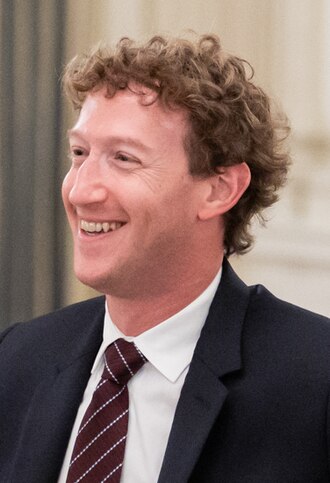
The Hawaii compound's underground shelter features a metal door filled with concrete (blast-resistant design), living space, mechanical room, and an escape hatch accessed via ladder, per planning documents reviewed by Wired. The compound is entirely self-sufficient with a 55-foot-diameter water tank and food production systems.
Primary Source
RH
Reid Hoffman
Risk Hedger
Preparedness
Has spoken publicly about the ultra-wealthy purchasing "apocalypse insurance" in the form of remote properties, particularly in New Zealand. Stated that buying property in New Zealand is a "wink, wink" code among tech billionaires for apocalypse preparation. Specific details about his own personal preparedness holdings remain private.
AI Inference
RF
Russell Fry
Risk Hedger
Preparedness
[constituency_baseline] District summary: South Carolina's 7th Congressional District encompasses the Pee Dee and Grand Strand regions of northeastern South Carolina, including all of Chesterfield, Dillon, Georgetown, Horry, Marlboro, Darlington, and Marion Counties, plus portions of Florence County. With approximately 763,513 residents, it is a solidly Republican seat (Cook PVI R+30) that Fry has represented since 2023 after defeating five-term Rep. Tom Rice in the primary. The district has a median household income of $59,582 — above the $37,585 national median but below South Carolina metro averages — and a poverty rate of 12.2% (ACS) to 16.9% (Data USA broader measure). The population is 64.9% White (Non-Hispanic) and 25.6% Black (195,000), with 5.42% Hispanic (41,400). An exceptionally high 97.6% of residents are U.S. citizens with only 4.63% foreign-born. The median age is 45.3 — significantly older than the national average of 38.5 — with 16% of residents aged 70+, making Medicare, Social Security, and healthcare access top constituent priorities. Only 24.4% hold bachelor's degrees, well below the 33.7% national average. Median home values are $231,500 with a 73.8% homeownership rate. The economy is anchored by healthcare and social assistance (44,321 employees), retail trade (42,591), and manufacturing (33,984). Tourism is a dominant driver in the Myrtle Beach/Grand Strand region, which hosts millions of visitors annually. The district is car-dependent: 78.7% drive alone to work with a 23.8-minute average commute. Key local concerns include tourism economy stability, hurricane preparedness, rural healthcare access, and senior services.
Pending Review
SM
Sarah McBride
Risk Hedger
Preparedness
Voted nay on H.R. 7744 (Department of Homeland Security Appropriations Act, 2026 (initial passage)) on 2026-03-05: McBride voted against the DHS funding bill that ended a partial DHS shutdown which began in February 2026. This bill funded border security, disaster relief (FEMA), and Coast Guard operations — all relevant to Delaware's coastal geography. Her consistent opposition to DHS funding under Secretary Noem placed constituent material needs (disaster preparedness, port security) in tension with her political opposition to the Trump administration's immigration enforcement.
Primary Source
SH
Scott H. Peters
Risk Hedger
Preparedness
Voted nay on H.R. 7147 (Department of Homeland Security Appropriations Act, 2026) on 2026-03-27: Peters voted against the DHS funding bill, consistent with his criticism of Republican immigration enforcement priorities. His district includes coastal communities vulnerable to disasters requiring FEMA response — a DHS function. His office stated the Republican bill was 'a waste of time' and called for addressing 'urgent DHS issues' including disaster preparedness, creating tension between his immigration stance and constituent disaster-preparedness needs.
Primary Source
SM
Shontel M. Brown
Risk Hedger
Preparedness
Voted nay on H.R. 7147 (Department of Homeland Security Appropriations Act, 2026) on 2026-03-27: Brown voted against the final DHS funding bill that funded ICE and CBP, consistent with her record of opposing immigration enforcement agencies. Her district is 97% citizen with only 6.32% foreign-born, giving her political insulation on immigration. However, DHS also funds FEMA and TSA functions that serve her district, creating cross-pressure between her anti-ICE stance and constituent disaster-preparedness and travel needs.
Primary Source
SH
Steven Horsford
Risk Hedger
Preparedness
Voted nay on H.R. 7744 (Department of Homeland Security Appropriations Act, 2026 (initial government shutdown-ending package)) on 2026-02-03: Horsford voted against the bipartisan shutdown-ending DHS funding deal negotiated by Senate Democrats, citing lack of 'meaningful guardrails' on ICE. Nevada depends on DHS for TSA (McCarran Airport) and FEMA disaster preparedness. His vote against funding created cross-pressure between his ICE-accountability stance and the needs of Nevada's tourism-dependent economy.
Primary Source
SL
Susie Lee
Risk Hedger
Preparedness
Voted nay on H.R. 7147 / H.R. 7744 (Department of Homeland Security Appropriations Act, 2026 (multiple votes against DHS/ICE funding)) on 2026-01-22: Lee voted against DHS funding after previously voting for the Laken Riley Act — opposing funding for the very agency that would carry out mandatory detention. She cited ICE conduct including agents detaining a 5-year-old child used 'as bait.' Only 7 Democrats voted to fund DHS/ICE. Her district relies on TSA at Harry Reid International Airport and FEMA for disaster preparedness, creating cross-pressure between ICE accountability and parochial needs.
Primary Source
SR
Sylvia R. Garcia
Risk Hedger
Preparedness
[constituency_baseline] District summary: Texas's 29th Congressional District encompasses eastern Houston and its northern suburbs, including parts of Harris County. It is home to approximately 752,781 residents and is a majority-minority district — 75.8% Hispanic, 20.1% White (Non-Hispanic), and 13.2% Black. The district has a median household income of $55,446, a poverty rate of 20-22.8% (well above the national average of 12.4%), and only 13.0% of adults hold a bachelor's degree — far below the national rate of 33.7%. 32.6% of residents are foreign-born, and 77.8% are U.S. citizens. The homeownership rate is 54.3% with a median property value of $189,000 and median rent of $1,192. The largest employment sectors are Construction (58,764 workers), Retail Trade (39,582), and Manufacturing (31,936). The district leans D+31 (Solid Democratic) and has been represented by Garcia since 2019. She succeeded Gene Green, who held the seat for 26 years. Garcia serves on the House Financial Services Committee and the House Judiciary Committee. Key local issues include immigration policy, economic inequality, healthcare access, education funding, food security, and disaster preparedness (Houston is hurricane-vulnerable). The district includes the Port of Houston and a significant energy-sector workforce, though many residents work in construction, retail, and service industries. Garcia is one of the first two Latinas to represent Texas in Congress.
Pending Review
VF
Vince Fong
Risk Hedger
Preparedness
[constituency_baseline] Ballot measure: Proposition 4 — Climate Bond (Safe Drinking Water, Wildfire Prevention, Drought Preparedness, and Clean Air Bond Act) (2024) — passed, margin 60.1% Yes, 39.9% No
Pending Review

Risk Theorists

Entities warning publicly without known private preparation
DM
David McCormick
Risk Theorist
Public Advocacy
[platform] McCormick's 2023 book 'Superpower in Peril: A Battleplan to Renew America' called China an 'existential threat' and argued for gaining technological and innovation superiority over China. He said he 'raised alarms about China' for years.
Primary Source
DN
Donald Norcross
Risk Theorist
Public Advocacy
Voted yea on H.Con.Res.38 (Directing the President to remove U.S. Armed Forces from unauthorized hostilities in Iran) on 2026-03-05: Norcross joined Republicans in voting to direct the removal of U.S. forces from hostilities in Iran. The measure failed 212-219, but Norcross's support placed him at odds with Democratic leadership on war powers. As a member of the House Armed Services Committee and a strong supporter of Israel (which views Iran as an existential threat), this vote created cross-pressure between his pro-Israel donor alignment and anti-war sentiment.
Primary Source
JR
James R. Baird
Risk Theorist
Public Advocacy
Voted yea on H.R.8034 (Israel Security Supplemental Appropriations Act, 2024 ($26.4 billion in military and security assistance to Israel)) on 2024-04-20: Baird voted with the overwhelming 366-58 bipartisan majority. The American Israel Public Affairs Committee contributed $5,500 to his 2024 campaign, making it one of his notable donors. His statement emphasized the 'existential threat to the safety and security of our greatest ally in the Middle East.'
Primary Source
MK
Mike Kelly
Risk Theorist
Public Advocacy
Voted yea on H.R. 4 (Rescissions Act of 2025 — On Passage) on 2025-07-18: Kelly voted to rescind previously appropriated spending, consistent with his fiscal hawk branding. The AFL-CIO scored this as 'Wrong' for gutting foreign assistance and eliminating federal support for public broadcasting. The vote aligned with his April 2025 op-ed praising DOGE cuts and calling the national debt an existential threat. Donors in oil & gas ($525K) and insurance ($935K) favor reduced federal spending.
Primary Source
SJ
Sir Julian Lewis
Risk Theorist
Public Advocacy
Under Lewis's chairmanship, the ISC published a major China report in July 2023 warning that China poses an 'existential threat to liberal democratic systems' through targeting of industry and technology
Primary Source
Verification Protocol
Claims are verified through public records: New Zealand Overseas Investment Office records, county planning department permits, SEC EDGAR filings, property appraisal databases, and FOIA requests. All evidence is tagged with confidence tiers following Goblin House methodology — Primary Source (direct quotes), Secondary (confirmed by credible reporting), or Inferential (derived from pattern analysis).